
Independent versus corporate: where small vet practices can still win
By Ben Long, Long Communications
Key points
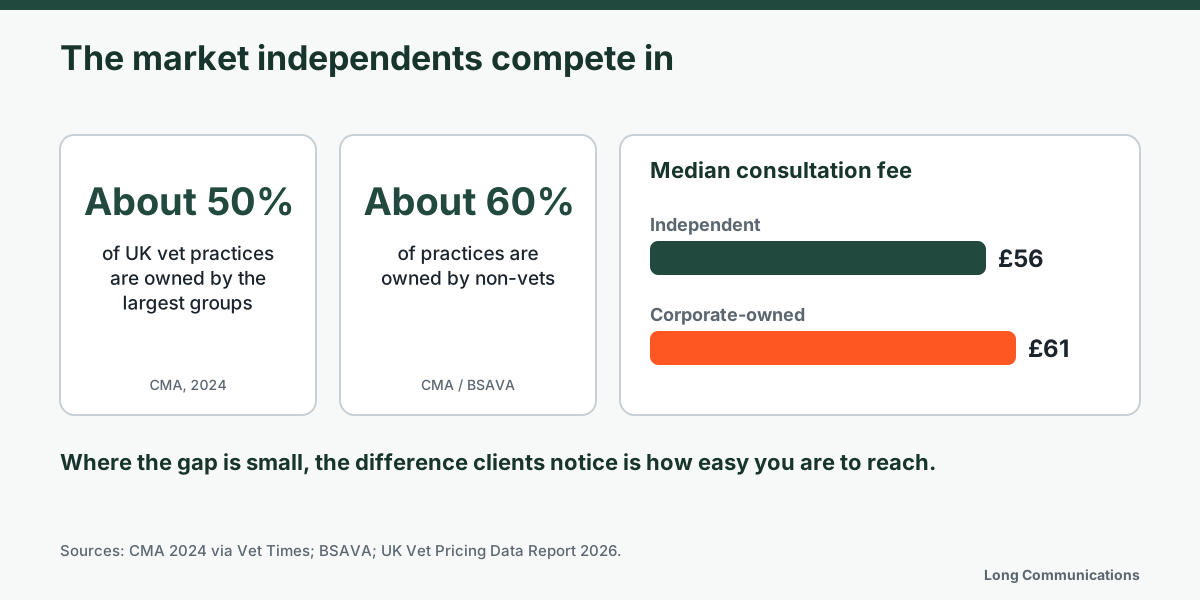
- The largest corporate groups own around half of UK vet practices; around 60% are owned by non-vets.
- Independent practices charge a median £56 for a consultation, against £61 at corporate-owned practices.
- Independents win on continuity, trust and local decisions; they lose on scale, staff and systems.
- Good call handling is one of the cheapest ways an independent can match a corporate's convenience.
Ask a client why they stay with an independent practice and the answer is rarely the price. It's "they know us", "we always see the same vet", or "they were brilliant when we lost our last dog". That loyalty is the independent's biggest asset. It is also easy to lose on the phone.
The market independents are competing in
The Competition and Markets Authority found in 2024 that the largest groups own around half of UK vet practices. It flagged possible competition concerns in 1,134 of 2,831 postcode districts. Around 60% of practices are now owned by non-vets.
On price, the gap is smaller than many assume. A 2026 study of published prices found a median consultation fee of £56 at independent practices and £61 at corporate-owned ones. The gap is wider for surgery.
Where the groups have the edge
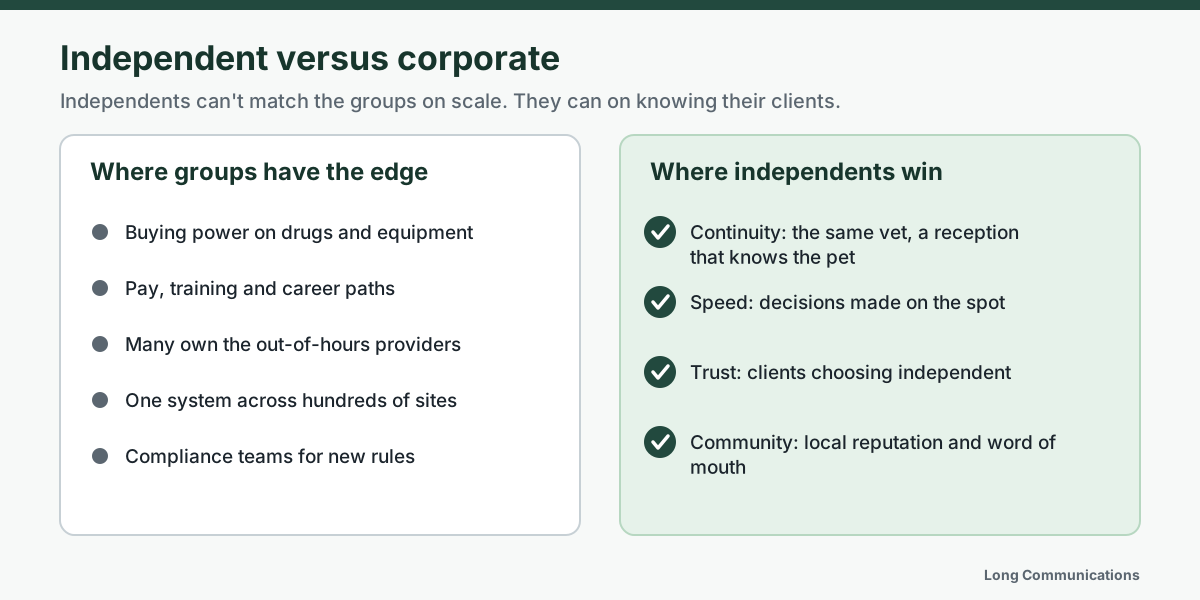
| Area | Why groups find it easier |
|---|---|
| Buying | Bulk deals on drugs, equipment and software |
| Staff | Larger salaries, training schemes and career paths |
| Out-of-hours | Many own the out-of-hours providers |
| Systems | Central IT teams roll out one system across hundreds of sites |
| Rules | Compliance teams handle new price-list and prescription rules |
Where independents still win
- Continuity. Clients see the same vet; reception knows the pet's name.
- Speed. Decisions are made on the spot, not by head office.
- Trust. Many clients actively choose "independent", and the new rules on ownership disclosure will make that easier to see.
- Community. Local reputation, word of mouth and genuine relationships.
Independents also band together. XLVets, founded in 2005, has over 70 member practices sharing buying, training and marketing. The Federation of Independent Veterinary Practices represents independents more widely.
The convenience gap, and how to close it
The groups are investing heavily in convenience: one system across every site, online booking, apps and central reporting. Clients now expect that everywhere.
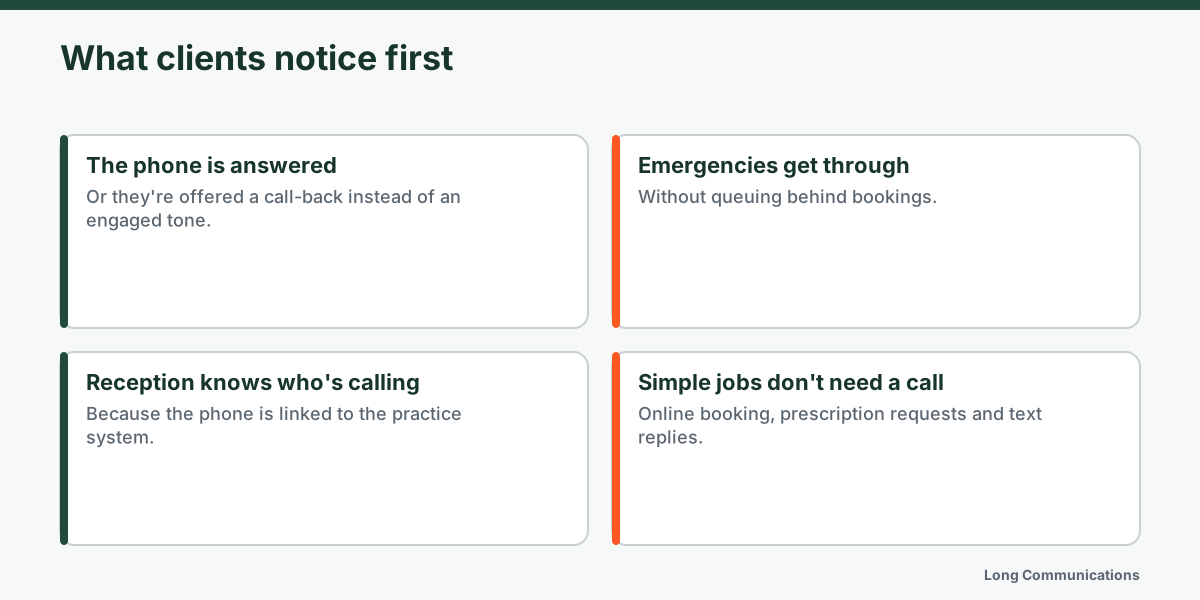
An independent doesn't need a group's budget to match it. What clients notice first is simple:
- The phone is answered, or they're offered a call-back instead of an engaged tone.
- Emergencies get through, without queuing behind bookings.
- Reception knows who's calling, because the phone is linked to the practice system.
- Simple jobs don't need a call: online booking, prescription requests and text replies.
Each of these protects what independents are best at. A client who gets through first time, to someone who knows their dog, feels the difference immediately.
What this means for your phones
- Find out how many calls go unanswered at your busiest times.
- Check whether reception can see who's calling before they answer.
- Offer at least one way to book or request prescriptions without phoning.
- Make sure your out-of-hours arrangements are as clear as a corporate's.
How does your practice compare?
My check starts with a few questions about your practice and shows how your set-up compares.
It takes about two minutes.
Frequently asked questions
- How many UK vet practices are owned by corporate groups?
- The Competition and Markets Authority found in 2024 that the largest groups own around half of UK practices. Around 60% of practices are owned by non-vets.
- Are independent vets cheaper than corporate vets?
- On consultations, slightly. A 2026 study of published prices found a median of £56 at independent practices and £61 at corporate-owned practices.
- How can independent vet practices compete with the big groups?
- By playing to their strengths: continuity of care, knowing clients, quick local decisions and a personal service. Buying groups such as XLVets help with scale. Easy contact, from answered phones to online booking, removes the convenience gap.
- What is XLVets?
- A community of independently owned veterinary practices, founded in 2005, with over 70 member practices across the UK. It offers shared buying, training and marketing support.