
The 8:30 Monday problem: how many clients give up before you answer?
By Ben Long, Long Communications
Key points
- Monday morning combines weekend worries, repeat prescriptions and booking calls in one short window.
- Reception is usually also greeting clients at the desk, so the phones lose.
- Callers who hear an engaged tone or ring out often try another practice.
- Call-back options, an emergency route, overflow between sites and online booking take the edge off the peak.
It's 8:31 on Monday. Overnight, three owners have decided their dog's limp, their cat's vomiting or their rabbit's not eating can't wait. Two clients need repeat prescriptions before work. Someone wants Friday's blood results. And the first appointment has just walked through the door.
Reception has two people and one queue.
Why Monday is different
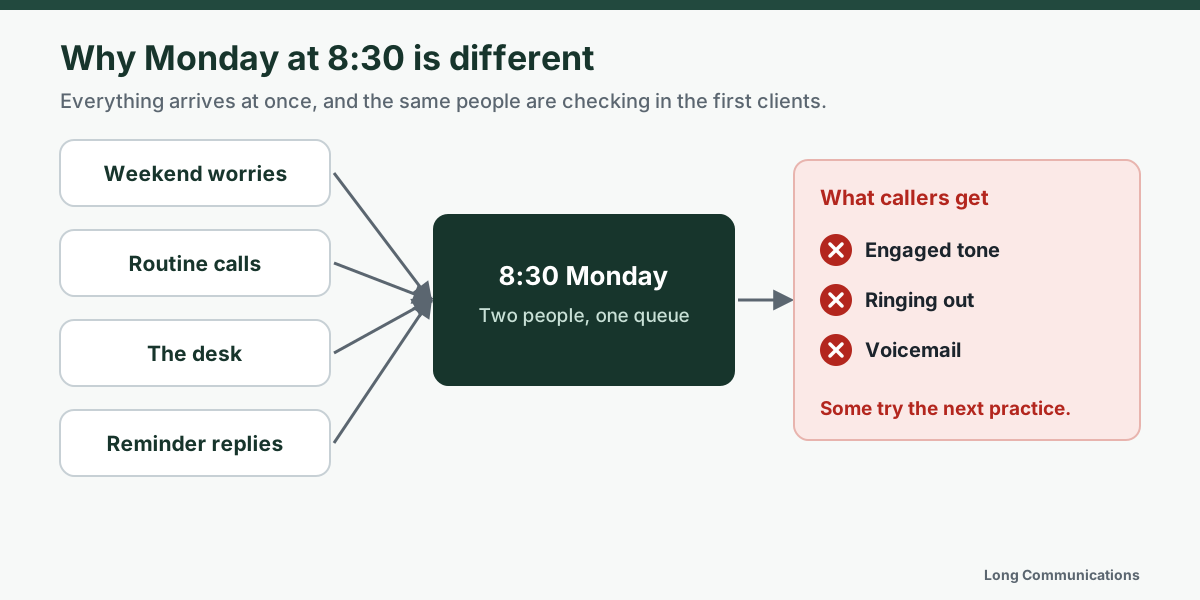
Monday morning combines several things at once:
- Weekend worries. Problems noticed on Saturday and Sunday arrive the moment you open.
- Routine calls. Bookings, prescriptions, results and collection times don't stop.
- The desk. The same people answering the phone are checking in the first clients.
- Reminder spikes. If vaccination reminders went out on Friday, Monday picks up the replies.
Seasonal peaks make it worse: fireworks season, the run-up to Christmas, and summer holiday paperwork.
What happens to the callers you miss
A caller who hears an engaged tone, rings out or reaches voicemail has three choices: try again later, book online if they can, or ring the practice down the road.
Loyal clients usually try again. New clients and worried owners often don't. Those are the calls that matter most: a new client is worth years of visits, and a worried owner remembers who was there for them.
At a UK average of about £60 for a consultation, even three lost visits a day adds up to around £47,500 a year. See the cost of a missed call for how that figure is worked out.
Five ways to ease the peak
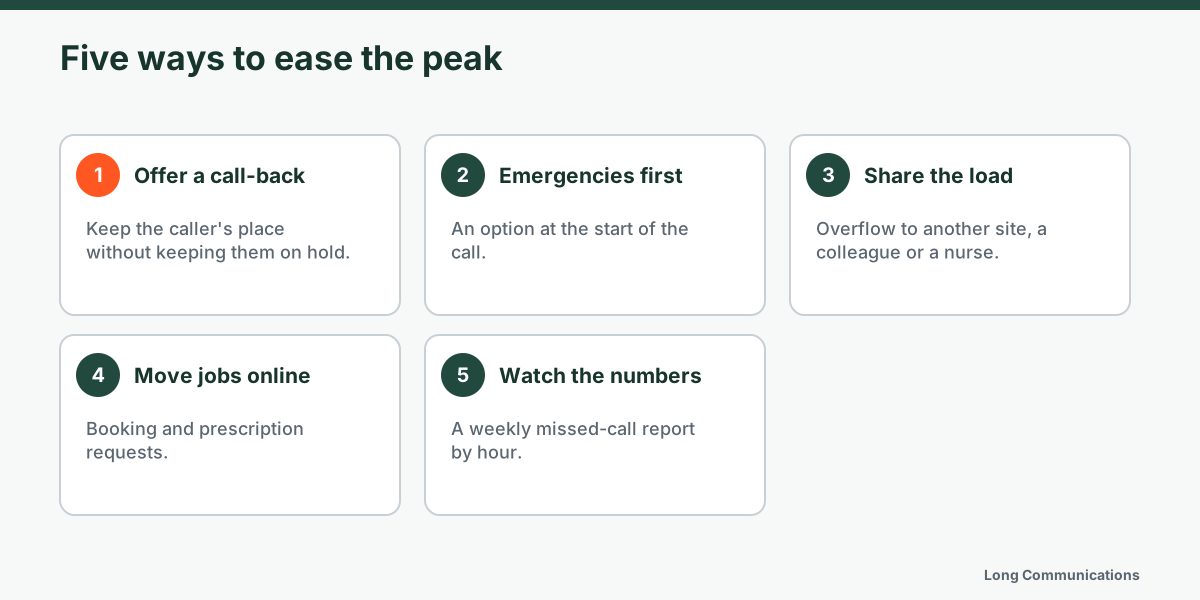
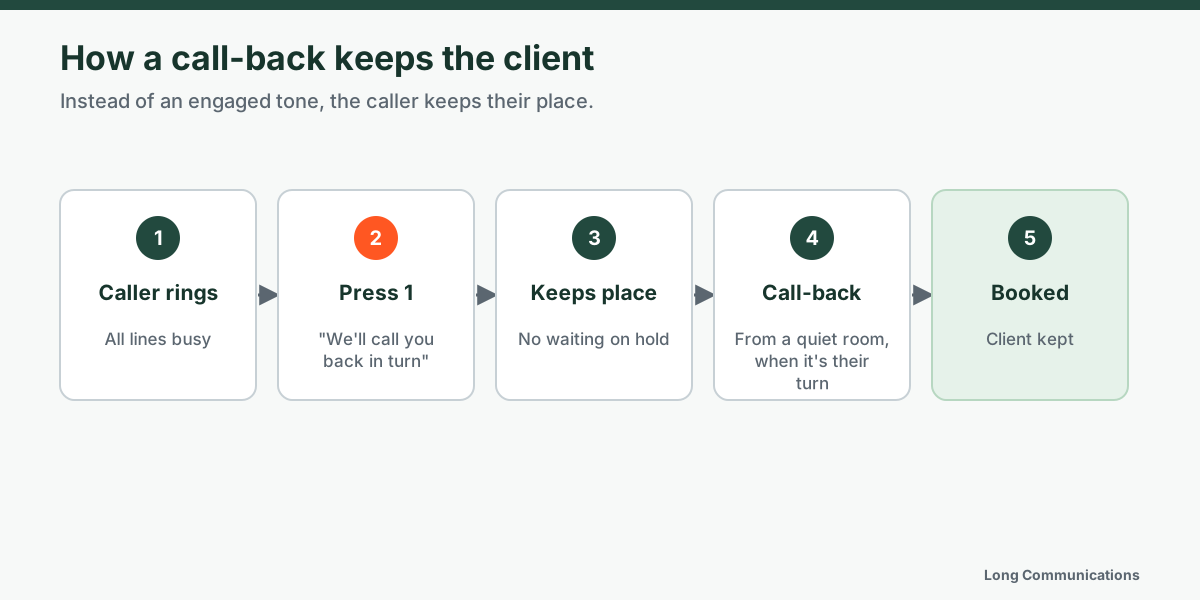
- Offer a call-back. "Press 1 and we'll call you back in turn" keeps the caller's place without keeping them on hold.
- Give emergencies their own route. An option at the start of the call puts seriously ill or injured animals first.
- Share the load. Overflow calls to another site, a back-office colleague or a nurse at peak times.
- Move routine jobs online. Online booking and prescription requests take pressure off the busiest half-hour.
- Watch the numbers. A weekly missed-call report by hour shows whether changes are working.
A note on staff
Reception teams carry the Monday rush, and phone stress is one reason good receptionists leave. Training a replacement takes weeks. A calmer peak is good for clients and for keeping your team.
What this means for your phones
- Find out what callers hear when all lines are busy.
- Ask for missed calls by hour for the last four Mondays.
- Check whether emergencies queue behind routine calls.
- Look at when reminders are sent, and stagger them if they all go on one day.
How does your practice compare?
The busy-times section of my check takes about two minutes and asks about your peaks, what callers hear, and whether you can see missed calls.
It takes about two minutes.
Frequently asked questions
- Why are vet phones so busy on Monday mornings?
- Owners who noticed something over the weekend ring as soon as the practice opens, alongside the usual booking, prescription and results calls, while reception is also checking in the first appointments.
- What happens to callers who can't get through to a vet?
- Some ring back later, some book online if they can, and some try another practice. A first-time caller who can't get through is the most likely to go elsewhere.
- How can a vet practice reduce missed calls at peak times?
- Offer a call-back instead of an engaged tone, give emergencies their own option, share calls between sites or with a back-office team, and move routine tasks such as bookings and prescriptions online.
- How do I know how many calls my practice misses?
- Most phone systems can produce a missed-call report by hour and day. If yours can't, tallying calls for one week gives a useful picture.