
Your practice is about to be licensed: what reform means for reception
By Ben Long, Long Communications
Key points
- The government consulted on reforming the Veterinary Surgeons Act from late January to 25 March 2026: the first overhaul in sixty years.
- Proposals include licensing practices as businesses, disclosing ownership, publishing prices and making complaints easier.
- Around 60% of UK practices are now owned by non-vets.
- How a practice handles calls, out-of-hours and complaints will become part of how it is judged.
For sixty years, the law has regulated vets as individuals. That is changing. The practice itself is set to become something that is licensed, inspected and held to account, and much of what gets judged happens at the front desk.
What is being proposed
The government consulted on reform of the Veterinary Surgeons Act from late January to 25 March 2026. It is described as the biggest change to the sector in sixty years. The main proposals are:
- Practices regulated as businesses, with an official operating licence and enforcement for those that fall short.
- Ownership disclosed. Around 60% of practices are owned by non-vets, often under unclear structures.
- Published price lists and openness about treatment options and cost changes.
- Easier complaints, with stronger rules on how businesses deal with clients.
- Veterinary nurses given legal recognition and brought into regulation.
No start date has been set, but the direction is clear. It also lines up with the Competition and Markets Authority's decision, which already requires price lists, ownership information and a written complaints process.
Why reception is in the spotlight
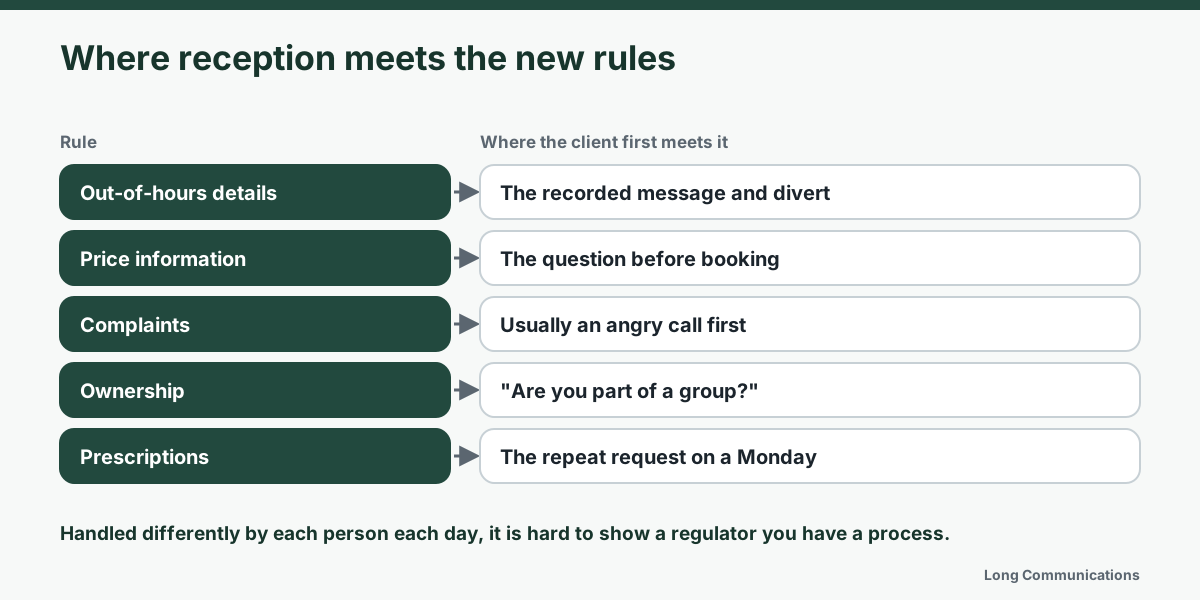
Think about where a client first meets each of these rules:
| Rule | Where the client meets it |
|---|---|
| Out-of-hours details | The recorded message and divert when the practice is closed |
| Price information | The question asked on the phone before booking |
| Complaints | Usually an angry phone call before anything is written down |
| Ownership | "Are you part of a group?" asked at the desk or on the phone |
| Prescriptions | The repeat request phoned in on a Monday |
If those moments are handled differently by each person on each day, a practice will struggle to show a regulator that it has a process.
Out-of-hours is already a rule
The Royal College already requires vets to be able to examine animals under their care around the clock, or to arrange that in advance, in writing, with another provider. Clients must be given the phone number, location, hours and type of service. A recorded message that reads out an old number, or a divert that fails, is not just poor service. It is a gap in a requirement that is in force today.
What this means for your phones
- Record your out-of-hours message carefully and check it whenever arrangements change.
- Test the out-of-hours divert regularly, including after any phone or line change.
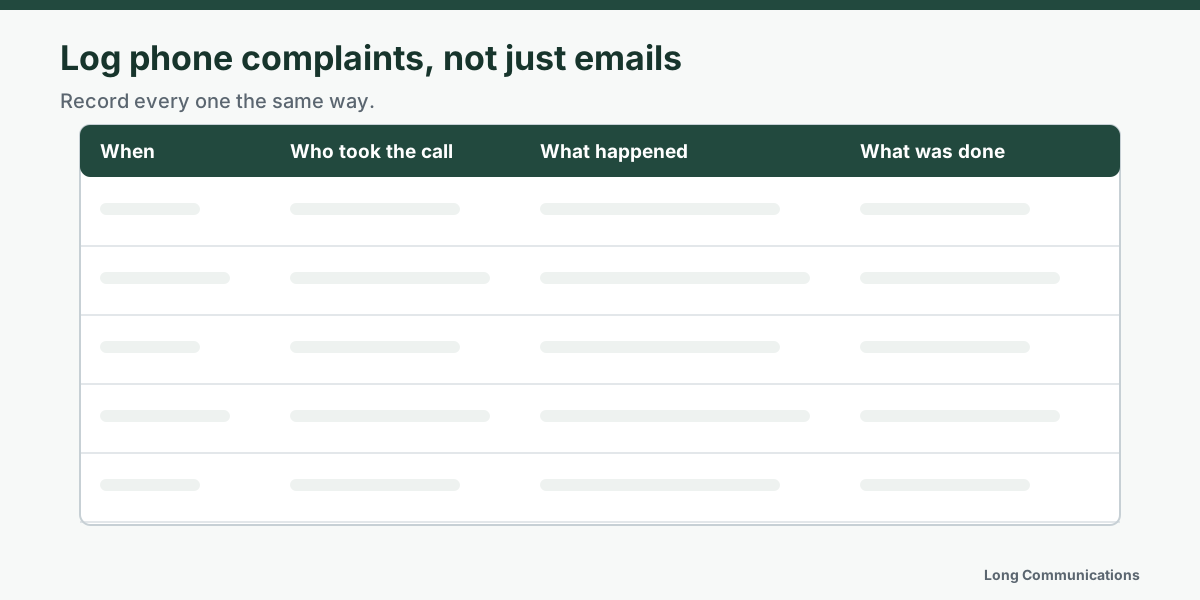
- Log complaints that arrive by phone, not just by email.
- Agree standard wording for price and prescription questions.
- Make sure you can show call records if asked: when calls came in and whether they were answered.
How does your practice compare?
The out-of-hours section of my check takes about two minutes and shows where the gaps usually are.
This article is a plain-English summary of proposals that may change, not legal advice. Check the detail with your professional body.
It takes about two minutes.
Frequently asked questions
- What is the Veterinary Surgeons Act reform?
- A government proposal to modernise the 1966 law that regulates vets. It would regulate practices as businesses, not just individual vets, with an operating licence, ownership disclosure and published prices. The consultation closed on 25 March 2026.
- When will vet practice licensing start?
- No start date has been announced. The consultation closed on 25 March 2026; legislation would need to follow.
- How does this affect vet reception teams?
- Complaints, client information, out-of-hours arrangements and price information all pass through reception and the phones. Practices will need clear, consistent processes and records.
- Is out-of-hours cover already a requirement?
- Yes. The Royal College already requires vets to provide 24-hour cover for animals under their care, or arrange it in advance in writing, and to give clients the details.